Dynamic Wayfinding
A dynamic wayfinding system at Schiphol Airport to provide real-time traffic updates and redirect drivers in case of disruption at the Kiss and Ride.
A dynamic wayfinding system at Schiphol Airport to provide real-time traffic updates and redirect drivers in case of disruption at the Kiss and Ride.
Air travel comes with many responsibilities for both the airport and passengers. The airport must offer reliable services for easy landside connectivity, and — in case of delays or disruptions — provide passengers with alternatives to catch their flight on time. The Kiss and Ride at Schiphol faces capacity and congestion problems which increase passenger stress. This thesis proposes a dynamic wayfinding system to keep drivers informed and redirect them in case of disruption.
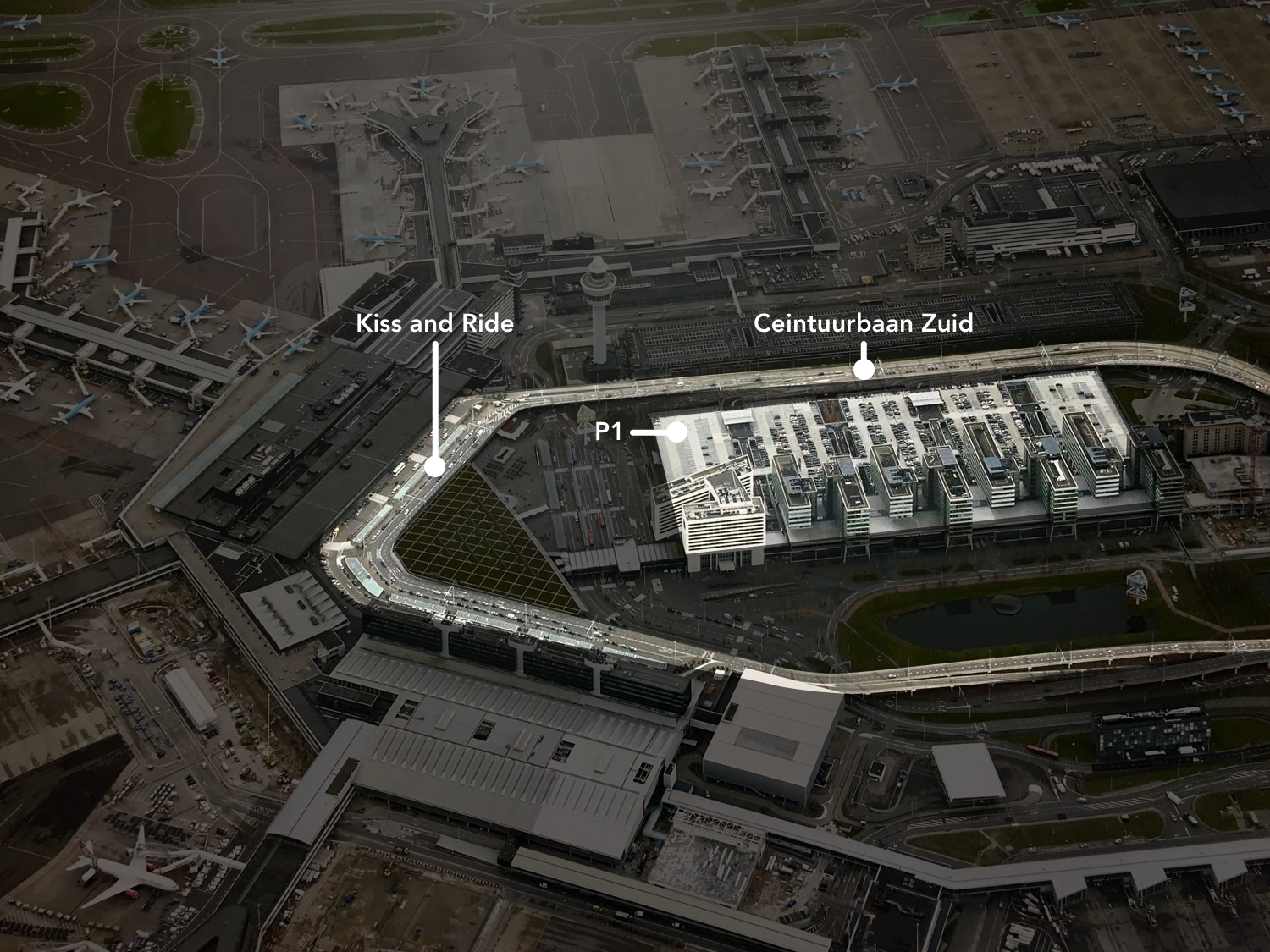
22.7% of Schiphol passengers are dropped off or picked up by car, using either the Kiss and Ride or P1 short parking. The K&R has reached its capacity limits during peak hours, with pick-ups and third-party services being the primary factors disrupting flow. Being the only free drop-off option makes it disproportionately attractive. With the expected growth in passenger numbers, congestion is projected to intensify in the coming years.
Time pressure
Time is central to the flying experience. Passengers are constantly aware of whether they will catch their flight, and stress levels while travelling to the airport are relatively high — even though Schiphol's overall experience scores above average (74 out of 100). Choices about when to leave and which route or modality to take all affect whether passengers arrive at the gate on time.
How passengers prepare
Research identified three types of travellers: those who search for information after arriving at the airport, those who plan ahead to know what to expect, and those who rely on others for guidance. Passengers who value efficiency and cost tend to take full ownership of their journey, while others prioritise comfort and arrange everything in advance regardless of price. For foreign travellers, Google Maps is the dominant navigation tool.
The system
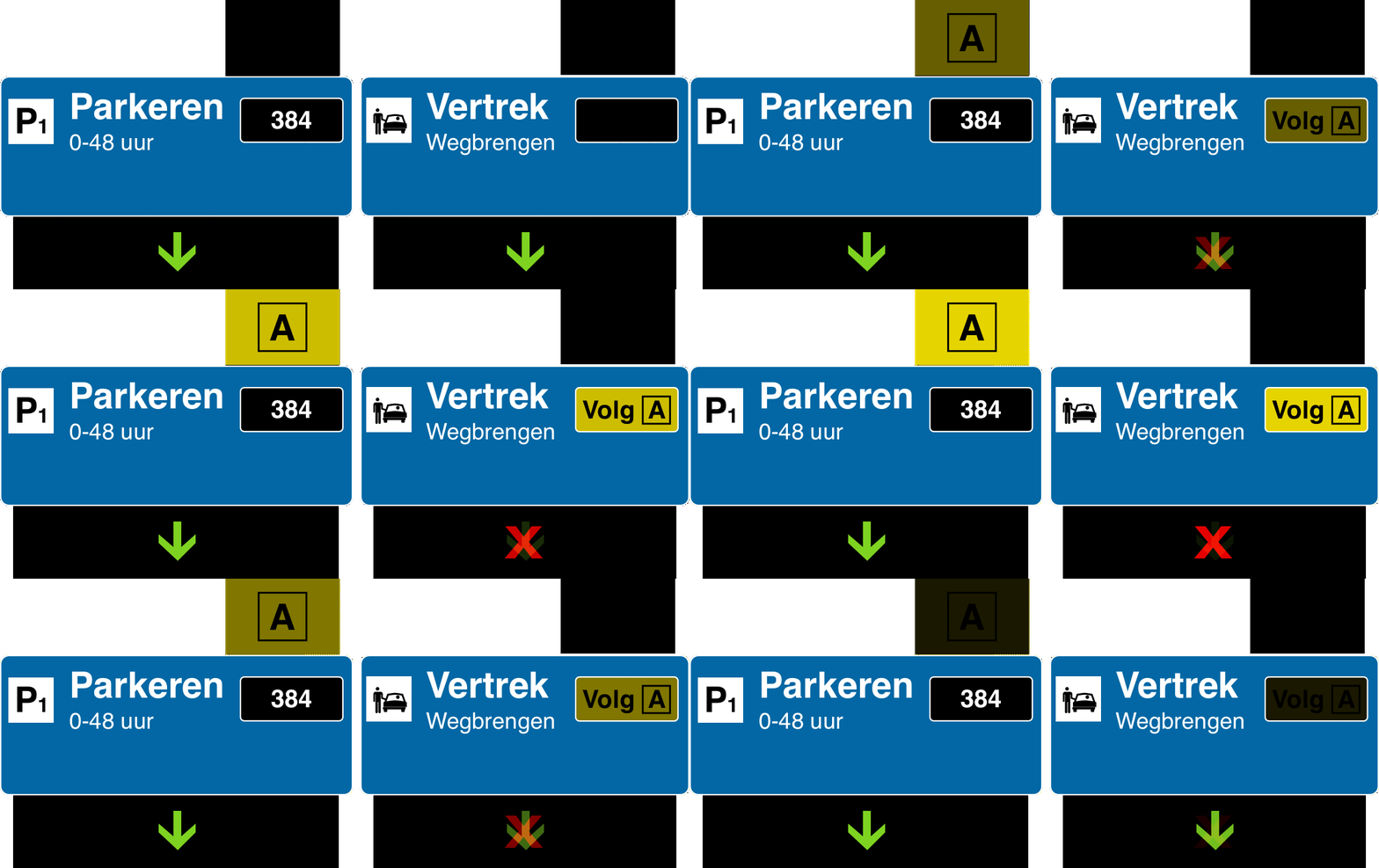
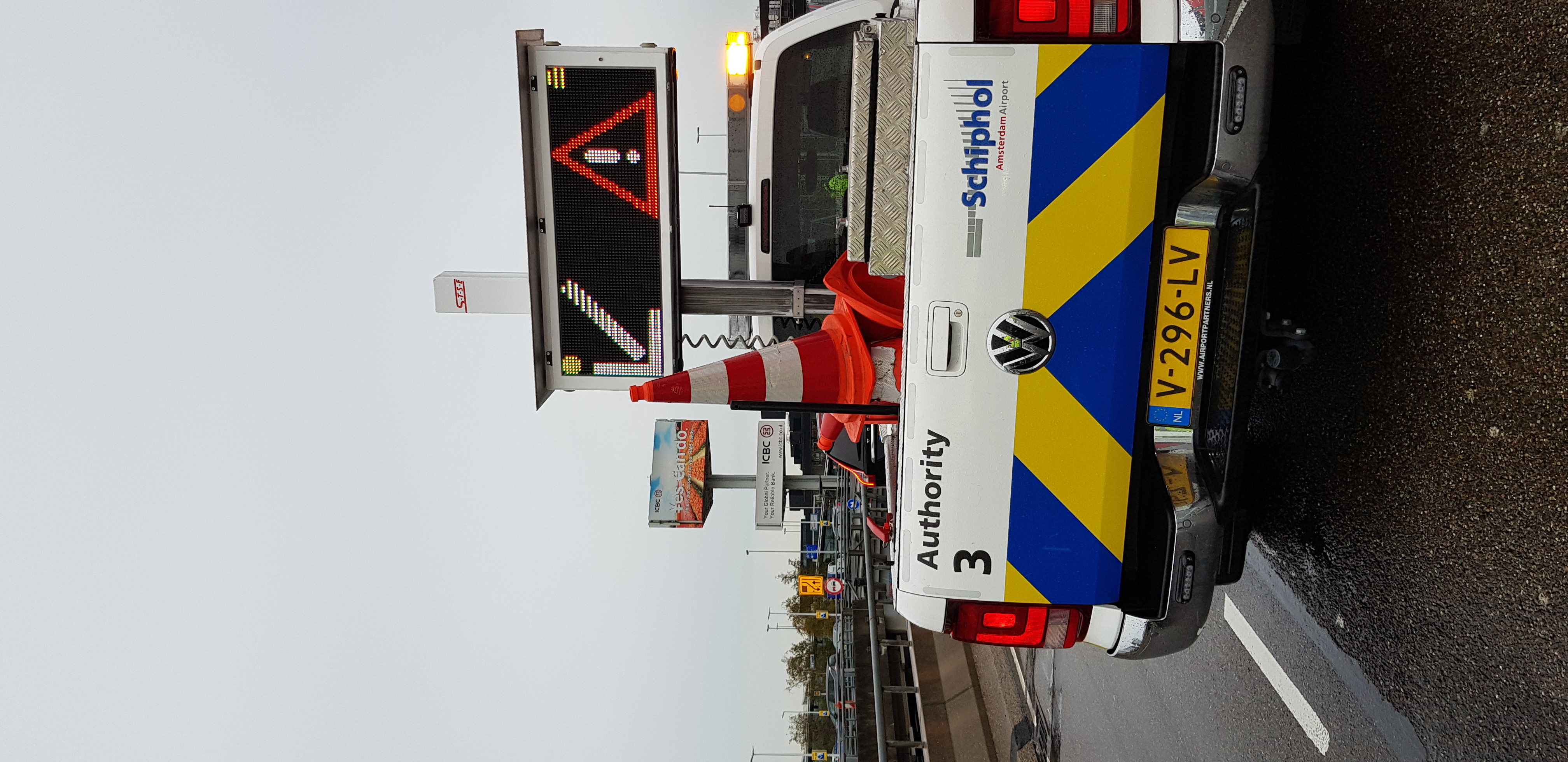
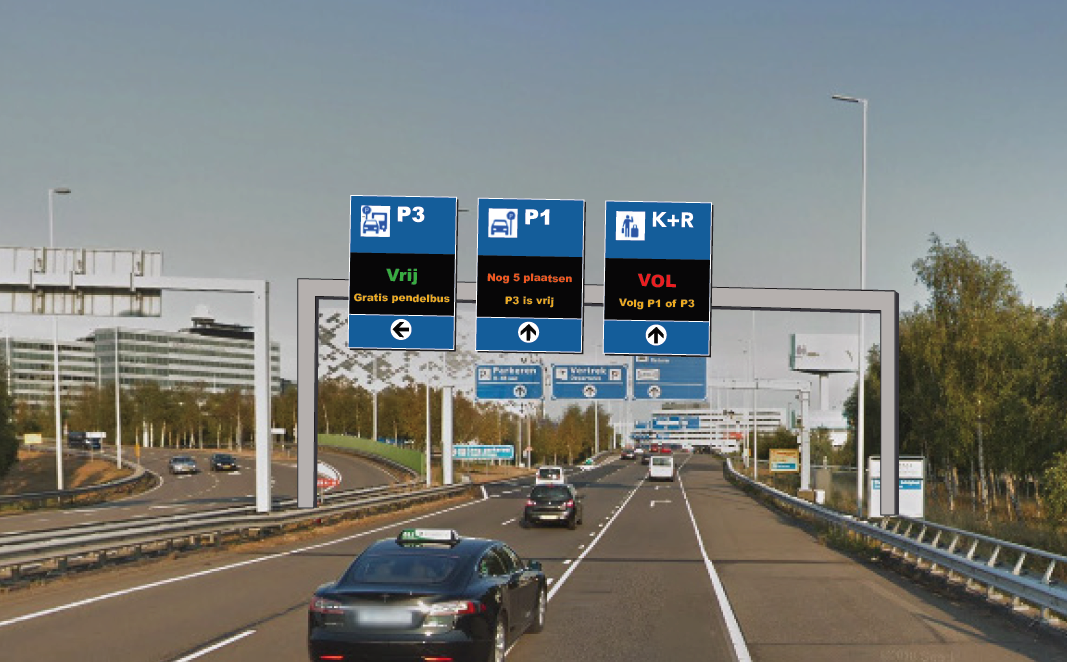
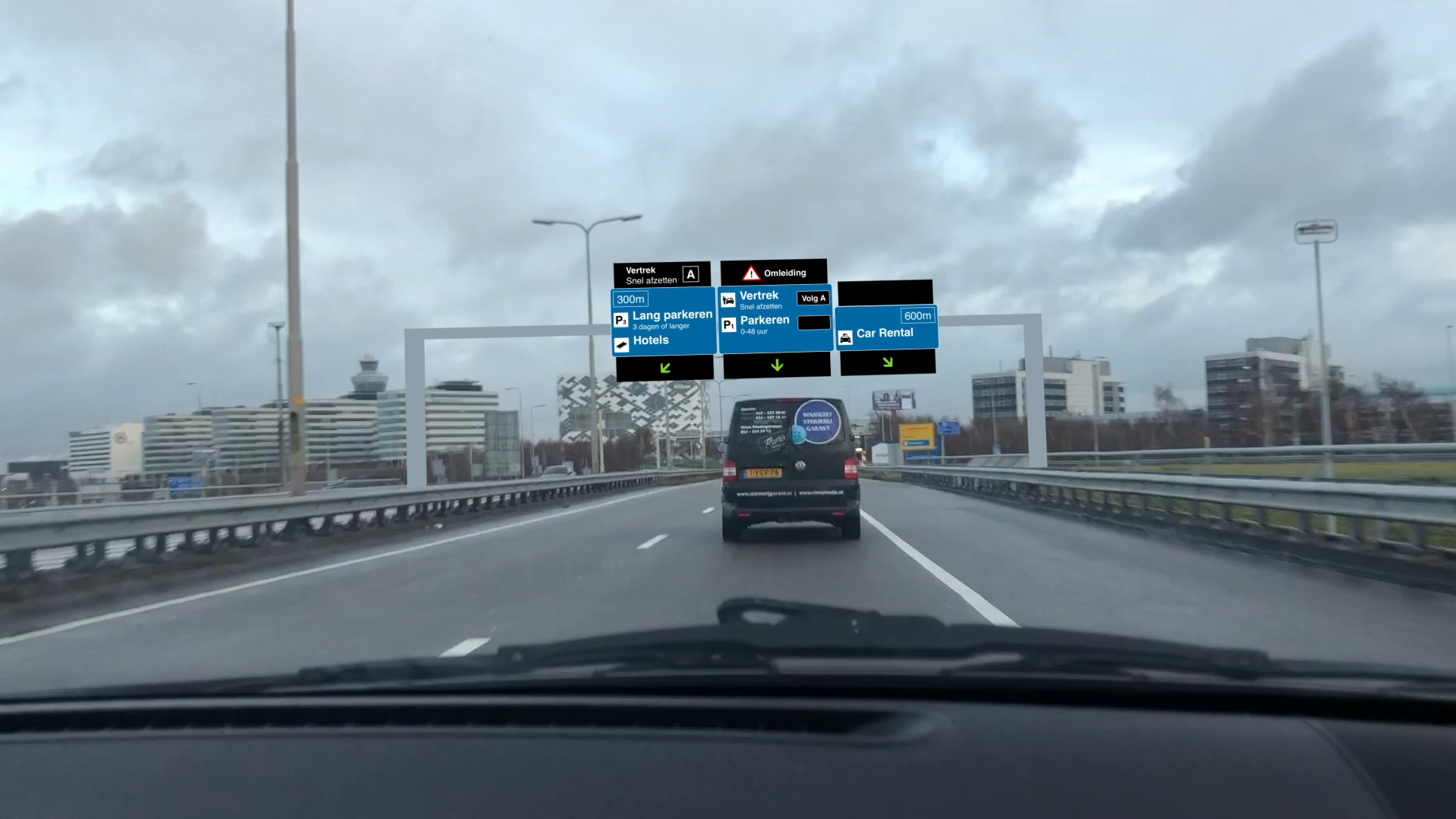
This project proposes the use of a dynamic wayfinding system to ensure that drivers are well-informed about the traffic situation at Schiphol, and to redirect them in case of disruptions. The design consists of dynamic traffic signs and sensors that measure the number of cars and travel speed to indicate congestion levels in the respective areas. The signs inform drivers and passengers intuitively, providing clear redirections and real-time awareness of the situation. The main benefit is that Schiphol's landside operation can proactively respond to congestion and contingencies, preventing unsafe situations while improving the overall passenger experience.
User testing
Several concepts and user tests were conducted throughout the development of the signs. The first iteration was evaluated alongside other concepts to define the overall design direction. A second iteration was tested with wayfinding experts and potential users to validate its effectiveness. The final designs were grounded in the patterns and principles established in Dutch traffic signage, ensuring intuitive recognition for drivers. For the final deliverable, all necessary signs were worked out to cover each relevant traffic scenario.
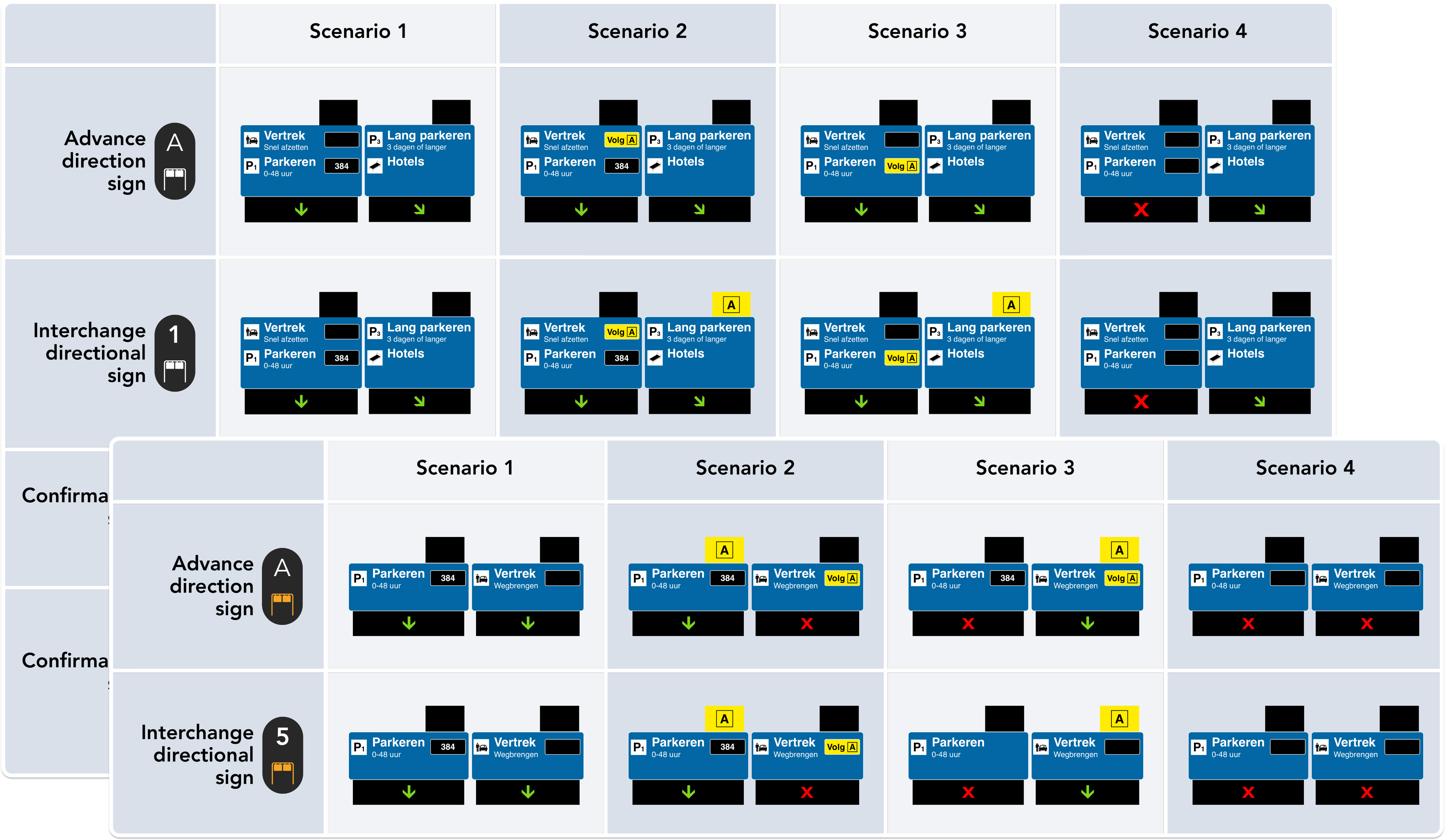
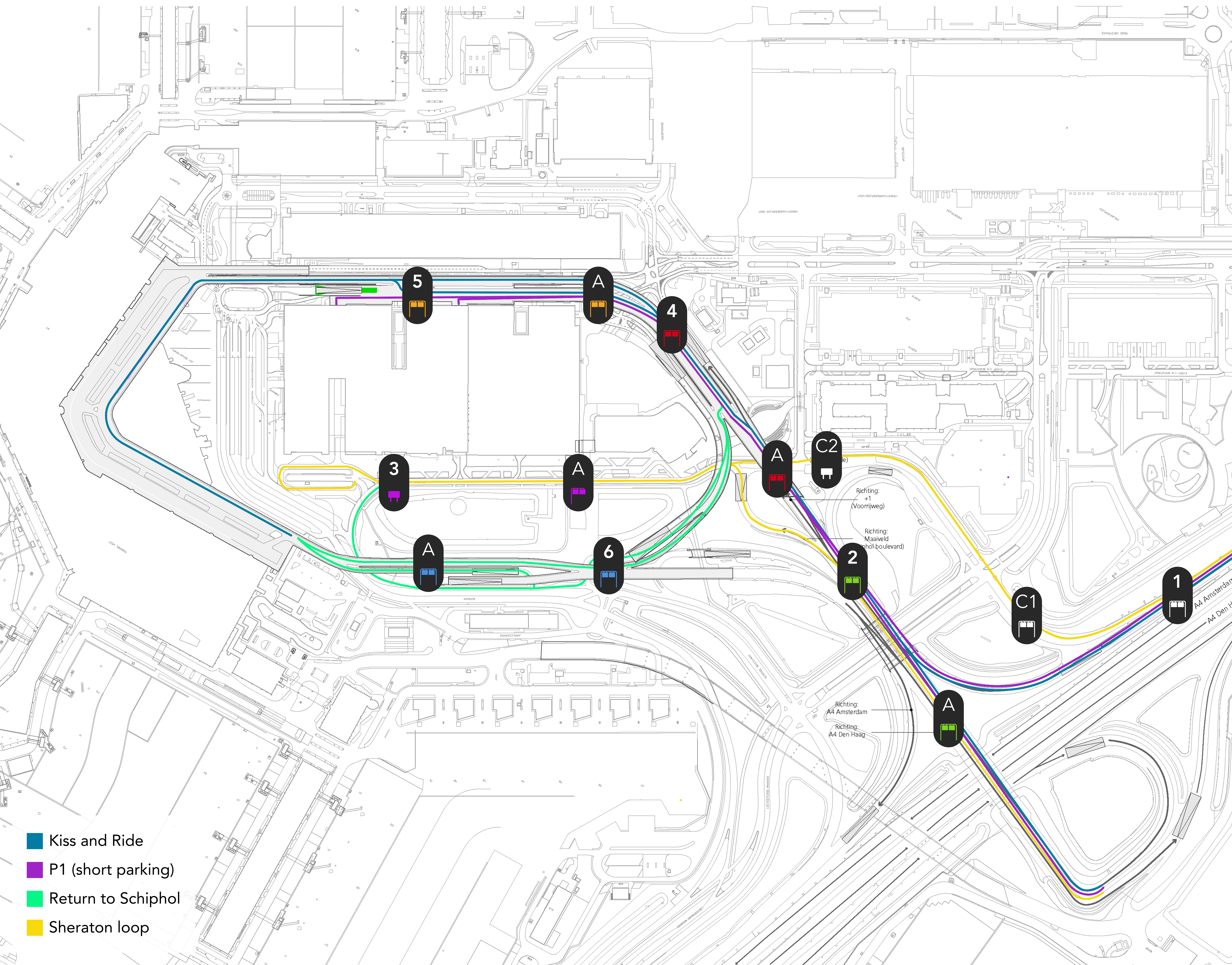
Flows were drawn to map the complete set of alternative routes available to drivers in case of congestion at the Kiss and Ride. These flows determined where dynamic signs should be placed and what information they need to communicate at each decision point. Different types of flows were drawn to define the decision points, alternative routes and placement of signs. The example below shows the different routes for cars and the placement of necessary signs.